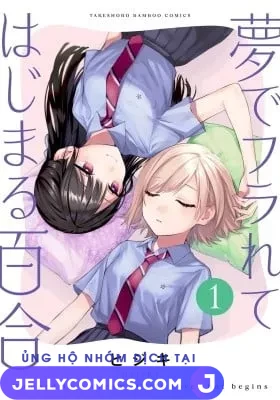
Yume de Furarete Hajimaru Yuri
Tên khác: Yume de Furarete Hajimaru Yuri Our Yuri Started with Me Getting Rejected in a Dream;;Yuri That Starts With Getting Rejected In a Dream, Dumped in a Dream, Yuri Begins, Bị Chia Tay Trong Mơ, Yuri Bắt Đầu, 夢でフラれて始まる百合
Tác giả: Đang Cập Nhật
Ngày đăng:
31-01-2026 09:55:10
Ngày cập nhật:
07-02-2026 15:12:04
Yume de Furarete Hajimaru Yuri by author Hijiki is a manga series that has garnered significant attention. The following article provides a detailed overview of the plot, setting, and why Yume de Furarete Hajimaru Yuri is worth adding to your reading list.
Yume de Furarete Hajimaru Yuri – official coverYume de Furarete Hajimaru Yuri – Main Plot and Review
Dive into the anxious heart of high school romance with Yume de Furarete Hajimaru Yuri, a GL manga masterclass in comedic angst and tender self-discovery.
|||
# The Anxious Affection: Unpacking the Emotional Resonance of Yume de Furarete Hajimaru Yuri
## Introduction: The Phenomenon of Yume de Furarete Hajimaru Yuri
Welcome, esteemed readers and fellow connoisseurs of captivating Girls Love narratives, to JellyComics' premier deep dive into a series that has not only charmed but profoundly resonated with a growing legion of fans: *Yume de Furarete Hajimaru Yuri*. Translated quite literally as "Our Yuri Started with Me Getting Rejected in a Dream" or "Yuri That Starts With Getting Rejected In a Dream," this Hijiki-penned gem, often simply referred to by its evocative Japanese title, is far more than just another entry in the crowded landscape of romance manga. It’s a meticulously crafted exploration of nascent feelings, the overwhelming weight of self-doubt, and the often-hilarious misinterpretations that arise when one's inner world clashes spectacularly with perceived reality. It masterfully weaves elements of **Comedy**, **Romance**, and the classic **School** setting into a narrative that feels both deeply personal and universally relatable for anyone who has ever grappled with unrequited affection, or at least, the *fear* of it.
At its core, *Yume de Furarete Hajimaru Yuri* introduces us to Tsukushi, a seemingly ordinary high school student whose life is irrevocably altered by a single, vivid dream. In this dream, she bravely confesses her unspoken feelings for her childhood friend, Hinoka, a girl described as outwardly appealing yet possessing an almost disarming naivety. The dream, however, culminates in a crushing rejection, a fictional blow that nonetheless leaves Tsukushi's waking world shattered and her perception of her dearest friend irrevocably altered. This seemingly simple premise—a dream dictating real-world anxiety—becomes the fertile ground for an exquisitely detailed character study and a wonderfully nuanced romantic comedy. The brilliance lies not just in the comedic situations that unfold from Tsukushi's escalating paranoia, but in the profound emotional honesty with which her internal struggle is portrayed. It’s a story about the delicate, fragile line between cherished friendship and burgeoning romantic love, and the terrifying prospect of crossing it, especially when one is convinced the outcome will be painful. This isn't merely a **GL manga**; it's a tender, often laugh-out-loud, dissection of adolescent vulnerability.
What makes *Yume de Furarete Hajimaru Yuri* particularly noteworthy, even from its very first chapters, is its immediate immersion into Tsukushi's subjective experience. Readers are privy to her every anxious thought, her every panicked overanalysis, her every desperate attempt to revert to a state of emotional normalcy that now feels irrevocably lost. The narrative's pacing, especially in these initial stages, is a testament to Hijiki's understanding of the psychological impact of such an event, however fictional its origin. It’s a masterclass in building tension and empathy, drawing us into Tsukushi’s increasingly chaotic mental landscape. The school backdrop provides the perfect stage for these internal dramas to unfold, with everyday interactions becoming fraught with meaning for our hyper-aware protagonist. From the subtle shifts in gaze to the innocent gestures of friendship, every moment is scrutinized, replayed, and often catastrophized within Tsukushi's mind, creating a compelling blend of humor and genuine pathos. This particular brand of romantic comedy, steeped in anxiety and misinterpretation, truly elevates *Yume de Furarete Hajimaru Yuri* beyond typical fare, solidifying its place as a must-read for fans of nuanced **Girls Love** stories.
## In-Depth Plot Analysis & World Building of Yume de Furarete Hajimaru Yuri
The narrative of *Yume de Furarete Hajimaru Yuri* commences with an exquisitely mundane yet psychologically devastating incident: Tsukushi's dream confession. This isn't merely a plot device; it's the genesis of Tsukushi’s profound psychological upheaval, a catalyst that shatters the comfortable equilibrium of her long-standing friendship with Hinoka. Before this dream, their bond was an unexamined given, a comforting constant in Tsukushi's life. They were inseparable, bound by years of shared experiences, inside jokes, and an implicit understanding that transcended words. Tsukushi’s perception of Hinoka was one of easy affection, a dependable presence, someone intrinsically woven into the fabric of her daily existence without the complicating layer of romantic intent. Hinoka, in Tsukushi's eyes, was simply Hinoka: charming, perhaps a little air-headed, but undeniably her best friend. This idyllic, if somewhat naive, understanding forms the critical baseline against which the ensuing internal conflict of *Yume de Furarete Hajimaru Yuri* is measured.
The dream, however, acts as a psychic shockwave. It isn't just a fleeting nocturnal fantasy; it’s a revelation, forcing Tsukushi to confront a hidden romantic yearning she didn't consciously acknowledge. The rejection within the dream, though not real, imbues her with a powerful, almost tangible sense of trauma. She awakens not just from sleep, but into a new, terrifying reality where her feelings for Hinoka are starkly undeniable, and the fear of actual rejection looms like an inescapable shadow. This immediate aftermath is where the genius of Hijiki's writing truly shines. Tsukushi's reaction is intensely human and utterly relatable: a surge of panic, a desperate urge to retreat, and an overwhelming desire to somehow "undo" the dream's revelations. Her internal monologues, often presented as dense blocks of text or fragmented thought bubbles, become a window into her spiraling anxiety, her mind a veritable battlefield of conflicting emotions and irrational fears.
This newfound apprehension immediately translates into awkwardness in her real-world interactions with Hinoka. The once-effortless banter becomes strained, every glance from Hinoka is scrutinized for hidden meaning, every innocent touch sends a jolt of alarm through Tsukushi. She begins to actively avoid Hinoka, a stark contrast to their usual inseparable dynamic, convinced that Hinoka somehow *knows* about her dream-confession, or worse, that her own feelings are now outwardly transparent. This forms the central comedic and dramatic tension of the early chapters of *Yume de Furarete Hajimaru Yuri*. The reader, observing from Tsukushi's perspective, is privy to her escalating paranoia, while Hinoka, largely unaware of the seismic shift in Tsukushi’s psyche, continues to act with her usual open affection, which Tsukushi often misinterprets as either pity, veiled mockery, or even a cruel form of teasing. This dramatic irony fuels much of the narrative's early humor, even as it underscores Tsukushi’s genuine emotional distress.
The world-building of *Yume de Furarete Hajimaru Yuri* might appear simple on the surface – a typical Japanese high school setting. However, Hijiki masterfully utilizes this seemingly ordinary backdrop to amplify the internal turmoil of its characters. The school becomes a microcosm of adolescent life, where social interactions are magnified, rumors can spread like wildfire, and the pressure to conform or stand out is ever-present. Classrooms, hallways, the cafeteria, and the school rooftop become stages for quiet dramas, accidental encounters, and moments of intense emotional vulnerability. It's a setting that provides both a sense of normalcy and an environment ripe for the kind of subtle, interpersonal tension that defines this genre. The mundane familiarity of the school allows the extraordinary nature of Tsukushi's internal struggle to truly stand out.
As the story progresses, the narrative skillfully navigates Tsukushi's attempts to "reset" her friendship, efforts that are often comically disastrous or inadvertently push her closer to Hinoka, further exacerbating her internal conflict. Hinoka's persistent kindness, her genuine concern for Tsukushi's suddenly distant demeanor, and her innocent attempts to bridge the growing gap between them only serve to heighten Tsukushi's distress and confusion. Each interaction, however small, becomes a significant plot point, meticulously detailed in Tsukushi's frantic internal monologue. For instance, a shared umbrella on a rainy day, an accidental brush of hands while reaching for a book, or a casual invitation to study together, all transform into moments of profound internal crisis for Tsukushi, moments she both cherishes and dreads.
The narrative also subtly introduces supporting characters, initially as background elements, but gradually giving them more defined roles. These characters, whether friends, classmates, or even teachers, serve to provide different perspectives, offer opportunities for external commentary (often misunderstood by Tsukushi), or simply act as catalysts for key interactions between Tsukushi and Hinoka. Their presence prevents the story from becoming too insular, anchoring the intense internal drama within a believable social context. While the core focus remains squarely on the evolving relationship between Tsukushi and Hinoka, these peripheral figures add texture and depth to the world of *Yume de Furarete Hajimaru Yuri*, reflecting the broader social network that shapes their high school lives. They also provide brief respites from Tsukushi's anxiety, offering moments of lighthearted interaction or external problem-solving that don't directly involve her romantic predicament.
Ultimately, *Yume de Furarete Hajimaru Yuri* is a masterful study in pacing, allowing the relationship between the two protagonists to unfurl with an organic, often frustratingly slow, yet ultimately rewarding rhythm. It’s a testament to the power of unspoken feelings and the internal battles fought long before any words are exchanged. The story meticulously documents the fragile dance between denying one's feelings and slowly, reluctantly, coming to terms with them, all under the shadow of a dream-induced fear. It doesn't rush the emotional development, instead lingering on the awkward silences, the charged glances, and the myriad of ways two people, once so comfortable, navigate a relationship now laden with new, complex emotions. It’s a narrative that respects the complexity of adolescent love, portraying it not as an instantaneous spark, but as a slow-burning ember, stoked by confusion, fear, and an undeniable, growing affection. This careful, deliberate unfolding of emotions is a hallmark of truly exceptional **GL manga**, and *Yume de Furarete Hajimaru Yuri* executes it with remarkable grace and comedic timing.
## Comprehensive Character Study
Delving into the characters of *Yume de Furarete Hajimaru Yuri* is akin to peeling back the layers of a particularly delicious, albeit anxiety-inducing, onion. Each individual, especially our protagonists, is rendered with such intricate detail that they feel profoundly real, their internal landscapes as vivid as their outward appearances. The genius of Hijiki’s writing lies in making us intimately familiar with their quirks, their vulnerabilities, and their growth.
### Protagonist Analysis: Tsukushi
Tsukushi is, ostensibly, an "average" high school student. This description, however, is merely a surface-level identifier. Beneath this veneer of normalcy lies a deeply sensitive, introspective, and profoundly anxious individual whose entire emotional framework is exquisitely explored throughout *Yume de Furarete Hajimaru Yuri*. Prior to the pivotal dream, Tsukushi exists in a state of quiet contentment, her life anchored by the unwavering presence of her best friend, Hinoka. Her personality can be characterized by a certain passivity, a tendency to observe rather than initiate, and a reliance on the comfortable predictability of her established routines and relationships. She likely enjoyed the stability of her bond with Hinoka, perhaps even took it for granted, unaware of the profound romantic undercurrents stirring within her own subconscious.
The dream, however, acts as a cataclysm. It’s not just a bad dream; it’s a revelation, a forced confrontation with a truth she had suppressed or simply not recognized. The "trauma" of this dream-rejection is central to her development. It shatters her psychological comfort zone, introducing a cascade of self-doubt and fear. The emotional blow, though fictional in its immediate context, translates into a very real, palpable anxiety in her waking life. She becomes terrified not only of the *idea* of rejection but also of the possibility that her newfound feelings for Hinoka will irrevocably damage their cherished friendship. This fear of loss, of an irreparable rift in their bond, becomes the primary driver of her internal conflict and much of the story's early humor and pathos.
Tsukushi’s coping mechanisms are a masterclass in adolescent awkwardness and overthinking. She develops an almost obsessive internal monologue, where every single interaction with Hinoka is replayed, dissected, analyzed for hidden meanings, and catastrophized. These internal soliloquies are often presented as dense, multi-panel thought bubbles, sometimes almost overwhelming the visual space, reflecting the sheer volume and speed of her anxious thoughts. She attempts avoidance, creating physical and emotional distance, only to find herself drawn back to Hinoka's orbit, often against her own will. She constantly second-guesses herself, questioning her intentions, her reactions, and even the very nature of her feelings. This cycle of panic, analysis, and avoidance defines her early chapters, making her an incredibly relatable protagonist for anyone who has experienced the paralyzing fear of unrequited love.
Her growth arc is one of the most compelling aspects of *Yume de Furarete Hajimaru Yuri*. It’s a slow, arduous journey from fear-driven avoidance to a reluctant, then gradual, and finally, confident acceptance of her feelings. This isn't a sudden epiphany but a series of small, incremental steps. She learns to differentiate between her dream-induced paranoia and the reality of Hinoka's actions. She begins to trust her own heart more, even amidst the anxiety. Her transformation involves moving from a passive observer of her own emotional turmoil to an active participant in her pursuit of happiness, however tentative that participation might be initially. This involves moments of bravery, vulnerability, and a willingness to risk discomfort for the sake of emotional honesty. The narrative beautifully captures the internal struggle of self-preservation battling against the innate human desire for connection and love. Tsukushi's journey is not just about finding love, but about finding herself, understanding the depths of her own emotions, and learning to navigate the terrifying yet exhilarating landscape of genuine affection. Her subtle shifts in expression – the gradual softening of her perpetually worried brow, the tentative smiles that replace nervous grimaces, the growing confidence in her posture – all visually communicate this profound internal growth, making her arc incredibly satisfying to witness.
### Antagonist/Side Character Analysis: Hinoka and Others
Hinoka, Tsukushi's childhood friend and the object of her anxieties, is initially presented as "appealing yet somewhat naive." This description, much like Tsukushi's "average" label, carries more weight than it initially appears. Hinoka embodies a disarming innocence, an almost guileless charm that makes her universally liked. Her appeal isn't just physical; it's rooted in her genuine warmth, her affectionate nature, and her seemingly boundless kindness. Her "naivety," however, is a crucial characteristic. It often manifests as an unawareness of the deeper emotional currents flowing around her, particularly Tsukushi's internal turmoil. She doesn't perceive Tsukushi's sudden distance or awkwardness as a sign of romantic feelings; instead, she interprets it through the lens of their established friendship, often worrying that she's upset Tsukushi or that Tsukushi is simply going through a tough time. This emotional blind spot is the source of much of the narrative’s dramatic irony and comedic misunderstandings.
Hinoka's interactions are consistently open and friendly, sometimes bordering on openly affectionate, without any conscious romantic intent initially. She might hold Tsukushi's hand, lean on her shoulder, or offer comforting words, all gestures that send Tsukushi’s anxiety into overdrive while remaining entirely innocent from Hinoka's perspective. The complexity of Hinoka's character lies in how her own feelings subtly begin to shift and develop *in response* to Tsukushi's changed demeanor. While not experiencing the same dream-induced panic, she grapples with the sudden distance and the inexplicable tension. This causes her to reflect on her own bond with Tsukushi, perhaps for the first time truly questioning the nature of their relationship. Is her naivety a protective barrier, or does she simply require a different catalyst to awaken her own romantic feelings? The story delicately suggests that Hinoka, too, embarks on a journey of self-discovery, albeit one that is less overtly traumatic than Tsukushi’s. Her reactions become more thoughtful, her glances more lingering, hinting at a reciprocal awakening that subtly builds the romantic tension.
Supporting characters, while not as central, play significant roles in enriching the world of *Yume de Furarete Hajimaru Yuri*. They are not mere background filler; they serve various narrative functions. Some provide **comic relief**, offering external commentary or engaging in lighthearted antics that temporarily divert from Tsukushi’s internal drama. Others act as **confidantes**, albeit often unwittingly. Tsukushi might confide in another friend about a generalized "friendship problem," projecting her anxieties onto a less specific scenario, allowing the reader to see how she processes her feelings externally, even if she's not fully honest. Certain characters can also act as **foils**, highlighting Tsukushi's anxieties by contrast, or as **catalysts for character development**, prompting interactions or observations that push Tsukushi (or Hinoka) to confront their feelings. For example, a classmate teasing them about being "always together" might initially make Tsukushi panic, but it could also subtly plant a seed of awareness in Hinoka's mind. The interplay between these minor characters and the protagonists adds layers of social realism, demonstrating how peer interactions and external perceptions can subtly influence personal emotional journeys within the **School** setting.
### Relationship Dynamics (Chemistry)
The heart of *Yume de Furarete Hajimaru Yuri* beats in the intricate and evolving **Relationship Dynamics** between Tsukushi and Hinoka. Their chemistry is a slow-burn masterpiece, built on a foundation of long-standing platonic intimacy that is gradually, painstakingly, transformed by the introduction of romantic yearning.
The pre-dream bond is characterized by a comfortable, almost telepathic understanding. They share a history, a shorthand, a level of familiarity that makes many words unnecessary. This bond is deeply ingrained, a bedrock of their adolescence. It’s a pure, unconditional friendship, but precisely *because* it’s so comfortable, it creates a formidable barrier to the acknowledgment of anything more. The thought of disrupting this perfect equilibrium is terrifying for Tsukushi.
The post-dream awkwardness is immediate and pervasive. The comfortable silence is replaced by unspoken tension, the easy laughter by hesitant smiles. Tsukushi’s internal panic creates a palpable shift in the power dynamics of their relationship. Suddenly, Hinoka, once a simple presence, becomes an object of intense scrutiny, her every gesture freighted with potential meaning. Tsukushi, in turn, feels exposed, vulnerable, and constantly on edge. This era of misunderstanding is crucial for the development of their chemistry. It forces both characters to re-evaluate their relationship, to notice things about each other they previously overlooked, and to confront the gaps in their communication.
The development of romantic chemistry is handled with exquisite delicacy by Hijiki. It’s not about grand gestures but about the accumulation of small, almost imperceptible moments. A prolonged glance across the classroom, an accidental brush of hands that lingers for a fraction too long, shared laughter that feels unusually intimate, or moments of unexpected vulnerability where one reveals a deeper layer of emotion to the other. These instances, initially agonizing for Tsukushi, gradually begin to carry a different weight. They become sparks, tiny confirmations that perhaps her feelings aren't entirely misplaced, or that Hinoka might not be as oblivious as she seems. The push-pull dynamic is ever-present: Tsukushi’s attempts to distance herself are met with Hinoka’s innocent closeness, creating a delightful dance of approach and retreat that amplifies the romantic tension.
**Miscommunications** are a driving force, particularly in the early stages. Tsukushi misinterprets Hinoka’s kindness as pity or teasing, while Hinoka misinterprets Tsukushi’s avoidance as a sign of her own failing as a friend. This creates a feedback loop of anxiety and confusion, which is often played for comedic effect, but also serves to underscore the profound difficulty of expressing vulnerable feelings, especially when one is convinced of impending rejection. The gradual, often excruciating, path towards mutual **understanding** is the ultimate goal. This involves small acts of courage from Tsukushi, moments where she allows her guard to drop, and equally, moments where Hinoka's own latent feelings begin to surface, perhaps through a subtle blush, a moment of unusual shyness, or an uncharacteristic admission of concern.
Ultimately, the chemical reaction between Tsukushi and Hinoka is one of profound emotional authenticity. Their individual growth, driven by Tsukushi’s initial dream-trauma and Hinoka's subtle awakening, directly impacts their ability to forge a deeper, more honest connection. The series beautifully demonstrates that true romantic chemistry isn't just an initial spark; it's a carefully nurtured flame, kindled through shared vulnerability, painful growth, and the eventual courage to articulate what has long remained unspoken. The evolution of their bond, from comfortable platonic to hesitant romantic, is the beating heart of *Yume de Furarete Hajimaru Yuri*, making it a truly compelling **Romance** story.
## Artistic Review: The Visual Mastery of Yume de Furarete Hajimaru Yuri
The visual storytelling in *Yume de Furarete Hajimaru Yuri* is nothing short of masterful, with Hijiki demonstrating a profound understanding of how art can enhance narrative, amplify emotion, and deepen characterization. Every panel, every line, every application of tone is meticulously crafted to draw the reader deeper into Tsukushi's anxious world and the blossoming, delicate romance. The art style is a critical component of why *Yume de Furarete Hajimaru Yuri* resonates so deeply with its audience, transforming simple dialogue into profound emotional exchanges.
**Line Work** is a standout feature. Hijiki employs a clean, delicate, yet remarkably expressive approach. The lines are generally thin and precise, lending a sense of crispness and clarity to the visuals. However, there's a nuanced variation in line weight that serves specific purposes. Thicker lines are often used for emphasis, perhaps to outline a character's form more sharply in a moment of heightened emotion, or to delineate important foreground elements, drawing the reader's eye. Conversely, delicate, almost feather-light lines are used for intricate details like strands of hair, the folds of clothing, or the subtle textures in backgrounds, contributing to an overall sense of refined artistry. This varying weight adds depth and dynamism without ever becoming overly heavy or distracting. It's particularly effective in character design, where the fluidity of lines allows for an incredible range of subtle facial expressions and nuanced body language, making the characters feel vibrant and alive.
The use of **Shading and Tones** is another area where Hijiki truly excels. As a black and white manga, the artist relies heavily on screentones to create texture, convey mood, and add depth. The application of these tones is incredibly thoughtful. Soft, diffused tones are frequently used to create a gentle, sometimes dreamlike atmosphere, especially in moments of introspection or budding romance. More defined, darker tones are employed to cast shadows, emphasizing moments of sadness, confusion, or the heavier weight of Tsukushi’s anxiety. Blush tones, often subtle gradients or finely dotted patterns, are used with exquisite precision to indicate embarrassment, burgeoning affection, or nervous flusteredness, particularly on the cheeks and ears of the characters. This careful application of tone avoids visual clutter, instead creating a harmonious balance that guides the reader’s emotional response, whether it’s a lighthearted comedic beat or a moment of profound emotional vulnerability.
**Panel Flow and Layout** are dynamic and intelligently designed to enhance pacing and emotional impact. Hijiki employs a versatile range of layouts, adapting them to the needs of the narrative. For comedic timing, panels might be arranged in rapid succession, often with exaggerated expressions, creating a quick, punchy rhythm that underlines Tsukushi's panicked reactions. For moments of emotional introspection or quiet intimacy, the panels might become larger, more expansive, sometimes bleeding into each other or utilizing more empty space around them to create a sense of lingering atmosphere. Overlapping panels are used effectively to show simultaneous actions or to visually represent the interconnectedness of thoughts and events. The use of gutters (the space between panels) is also deliberate, sometimes widened to create a sense of temporal pause or compressed to hasten the flow of action. This fluid paneling ensures that the reader's eye is always guided effectively, and the visual rhythm of the story perfectly matches its emotional beats.
**Character Design** in *Yume de Furarete Hajimaru Yuri* is both distinctive and incredibly expressive. Tsukushi and Hinoka, while adhering to common high school archetypes, possess unique visual identities that set them apart. Tsukushi's design often highlights her internal turmoil through her expressive eyes, which can convey wide-eyed panic, thoughtful introspection, or nervous darting glances. Her body language, too, frequently reflects her anxiety, with hunched shoulders, clasped hands, or hesitant postures. Hinoka, in contrast, is often drawn with a more open, radiant demeanor, her smiles genuine, her posture relaxed, embodying her initial naive charm. However, as the story progresses and her own feelings begin to surface, subtle changes in her design become apparent – a slight blush, a more pensive expression, a less overt display of affection. The characters' visual cues, from the slightest twitch of an eyebrow to the positioning of their hands, are crucial in conveying their unarticulated emotions, making their internal worlds almost as visible as their external actions. Hijiki excels at depicting the micro-expressions that betray true feelings, especially the beads of sweat that frequently appear on Tsukushi’s brow during her moments of intense overthinking.
The **Backgrounds** in *Yume de Furarete Hajimaru Yuri* strike a careful balance between detail and minimalism. When the scene requires it, such as depicting a bustling classroom or a specific urban landscape, the backgrounds are rendered with sufficient detail to establish the setting and atmosphere. However, in moments of intense emotional focus, particularly during internal monologues or intimate character interactions, backgrounds often become minimalist, sometimes fading into soft tones or abstract patterns. This strategic choice ensures that the reader's attention remains squarely on the characters and their emotional states, preventing visual clutter from detracting from the narrative's core. The use of atmospheric effects, such as dappled sunlight through windows or falling cherry blossoms, also adds to the overall aesthetic, subtly enhancing the mood without overshadowing the primary focus.
The **Overall Aesthetic** of *Yume de Furarete Hajimaru Yuri* is one of delicate charm, emotional sincerity, and intelligent comedic timing. The art style complements the story's themes perfectly: the clean lines and gentle tones evoke the purity and fragility of young love, while the expressive character designs and dynamic paneling bring the comedic anxiety to life. It’s an aesthetic that is both visually appealing and deeply effective in conveying the nuanced emotional landscape of a budding Girls Love romance. Hijiki's unique artistic voice shines through, creating a visual experience that is as rich and engaging as the narrative itself, cementing its place as a visually stunning **GL manga**.
## Why Yume de Furarete Hajimaru Yuri Stands Out: A Comparative Analysis
In the vibrant and ever-expanding universe of **Girls Love** manga, *Yume de Furarete Hajimaru Yuri* carves out a distinctive niche for itself, differentiating its narrative and emotional impact from other prominent titles in the genre. While sharing thematic commonalities with its peers, Hijiki's work distinguishes itself through its unique narrative hook, its masterful balance of humor and emotional depth, and its deeply relatable portrayal of adolescent anxiety.
When we consider genre giants like *Bloom Into You*, we recognize a shared focus on the complexities of self-discovery and the understanding of what "love" truly means. *Bloom Into You* delves into the protagonist Yuu's inability to feel special emotional resonance for others, exploring her journey of learning to understand and experience love. *Yume de Furarete Hajimaru Yuri*, however, approaches internal conflict from a different angle. Instead of a protagonist who *cannot* feel love, Tsukushi is burdened by a protagonist who *suddenly realizes* she *does* feel love, but views this realization through the lens of profound fear and potential rejection. The dream-induced trauma of *Yume de Furarete Hajimaru Yuri* provides a specific, high-stakes psychological trigger that grounds Tsukushi's anxieties in a palpable, immediate crisis, contrasting with Yuu's more philosophical and gradual exploration of her emotional landscape. Both are excellent character studies, but *Yume de Furarete Hajimaru Yuri* leans heavily into the comedic angst of a specific, overwhelming fear.
Compared to more overtly dramatic or sometimes explicit series like *Citrus*, *Yume de Furarete Hajimaru Yuri* occupies a softer, more introspective space. *Citrus* often thrives on high drama, intense romantic tension, and a quicker progression of physical intimacy, sometimes bordering on the melodramatic. In contrast, *Yume de Furarete Hajimaru Yuri* maintains a delicate, slice-of-life sensibility, focusing on the subtle shifts in emotion and the internal battles fought long before any significant physical interaction occurs. The romance here is built on unspoken feelings, lingering glances, and the agonizing slowness of genuine emotional realization, making it feel more grounded and less driven by external conflict. Its charm lies in its quiet intimacy rather than explosive passion, catering to readers who appreciate a more gentle and gradual unfolding of **Romance**.
Then there are series like *Adachi to Shimamura*, which excels in its portrayal of a slow-burn romance evolving from a friendship, meticulously detailing the awkwardness and the profound internal thoughts of its protagonists as they navigate their growing feelings. *Yume de Furarete Hajimaru Yuri* shares this "awkwardness" factor, particularly through Tsukushi's overwhelming anxiety. However, *Yume de Furarete Hajimaru Yuri*'s initial premise—the dream rejection—gives it a distinct narrative engine. While Adachi's anxieties are more generalized social anxieties that become focused on Shimamura, Tsukushi's anxiety is hyper-specific and directly tied to a singular, traumatic (albeit imagined) event. This makes Tsukushi's internal monologues and reactions distinctly different, often leading to more overtly comedic situations born from her extreme paranoia. The pacing of the reveal and resolution of feelings also differs, with *Yume de Furarete Hajimaru Yuri* perhaps offering a slightly more direct, if still protracted, journey towards the characters’ mutual understanding.
*Yume de Furarete Hajimaru Yuri*'s unique selling points solidify its standing. The **"dream rejection" as a specific narrative hook** is incredibly original, immediately setting it apart. It bypasses the usual initial uncertainties of "do I like her?" and plunges the protagonist directly into the fear of "she rejected me, what now?" even if only in a dream. This creates an immediate, high-stakes premise for **Comedy** and emotional turmoil. Furthermore, the manga's **impeccable balance of humor and genuine emotional angst** is a delicate tightrope walk that Hijiki performs flawlessly. The humor is never at the expense of Tsukushi's very real suffering; instead, it's born from the relatability of her overreactions and internal catastrophizing, making the emotional payoff all the more satisfying. Finally, the **relatability of Tsukushi's anxieties** is paramount. Many readers, regardless of their sexual orientation, can connect with the fear of vulnerability, the terror of confessing feelings, and the agonizing process of self-discovery. This universal appeal, wrapped in a charming and beautifully illustrated **GL manga**, ensures that *Yume de Furarete Hajimaru Yuri* is not just another genre entry, but a truly special and memorable read.
## FAQ: Everything You Need to Know about Yume de Furarete Hajimaru Yuri
### Is "Yume de Furarete Hajimaru Yuri" a completed series, or is it ongoing?
At the time of this deep dive review at JellyComics, *Yume de Furarete Hajimaru Yuri* is an ongoing manga series. Its narrative continues to unfold, meticulously detailing the evolving relationship between Tsukushi and Hinoka as they navigate their complex feelings and the lingering anxieties stemming from Tsukushi's pivotal dream. Fans can eagerly anticipate new chapters as the story progresses towards its resolution, experiencing the journey of these two delightful characters in real-time.
### What age rating is appropriate for "Yume de Furarete Hajimaru Yuri"?
*Yume de Furarete Hajimaru Yuri* is generally considered appropriate for teen readers, typically rated 13+ or 16+. While it delves into romantic feelings and emotional introspection, the content is largely wholesome, focusing on budding affection, comedic misunderstandings, and the internal struggles of high school students. There are no explicit scenes or overly mature themes, making it a comfortable and engaging read for a young adult audience interested in **Romance** and **Girls Love** stories in a **School** setting.
### Is "Yume de Furarete Hajimaru Yuri" primarily focused on comedy or drama?
*Yume de Furarete Hajimaru Yuri* strikes an exquisite balance between **Comedy** and emotional drama, often blending the two seamlessly. While much of the humor stems from Tsukushi's over-the-top anxieties and her misinterpretations of Hinoka's actions, the series never shies away from exploring the genuine emotional depth and vulnerability inherent in young love and the fear of rejection. It expertly uses comedic relief to punctuate moments of deep introspection, making the dramatic moments feel more poignant and the lighthearted ones genuinely funny. It's a testament to Hijiki's skill that neither aspect overwhelms the other, creating a rich and varied reading experience.
### What makes the protagonist, Tsukushi, so relatable in "Yume de Furarete Hajimaru Yuri"?
Tsukushi's relatability in *Yume de Furarete Hajimaru Yuri* stems from her intensely human portrayal of anxiety and self-doubt. Many readers can identify with her overthinking, her fear of vulnerability, and the terror of expressing true feelings, especially when a cherished friendship is on the line. Her internal monologues, filled with spiraling concerns and desperate attempts to analyze every interaction, perfectly capture the often-chaotic mental landscape of someone navigating unrequited (or seemingly unrequited) love. Her journey of growth, from fear to tentative acceptance, resonates deeply, offering a compelling and empathetic look at adolescent emotional development within the **GL manga** genre.
### Why should I read "Yume de Furarete Hajimaru Yuri" if I'm already a fan of Girls Love manga?
If you are a fan of **Girls Love** manga, *Yume de Furarete Hajimaru Yuri* offers a refreshingly unique take on the genre, primarily through its innovative "dream rejection" premise. It provides a deeper dive into the psychological impact of perceived rejection, offering a more nuanced exploration of anxiety and emotional growth than many contemporaries. Its expert blend of **Comedy** and genuine **Romance**, coupled with Hijiki's delicate art style and highly expressive character work, creates a truly charming and memorable reading experience. It celebrates the subtle beauty of unspoken feelings and the courageous journey of self-discovery, making it an essential addition to any GL enthusiast's reading list, especially for those who appreciate character-driven narratives set in a relatable **School** environment.
## Final Verdict: Why You Must Read It at JellyComics
As the Lead Comic Critic at JellyComics, I have had the privilege of immersing myself in countless narratives, each vying for attention in the bustling landscape of manga. Yet, few have captivated my critical eye and resonated with my emotional core quite like *Yume de Furarete Hajimaru Yuri*. This series is not merely another entry in the **Girls Love** genre; it is a meticulously crafted psychological dramedy, a nuanced character study, and a masterclass in visual storytelling that transcends its initial, deceptively simple premise. It’s the kind of manga that lingers in your thoughts long after you've turned the last page, urging you to revisit its delicate emotional beats and laugh at its perfectly timed comedic anxieties.
The sheer depth of analysis applied to Tsukushi's psyche, born from a fantastical yet profoundly impactful dream rejection, is a narrative triumph. We don't just observe her anxiety; we *feel* it, experiencing her spiraling thoughts, her panicked internal monologues, and her genuine fear of losing her most cherished friend. Her growth arc is a testament to the power of slow, authentic development, transforming her from a character defined by apprehension into one capable of courageously confronting her deepest feelings. This isn't just a story about falling in love; it's a profound journey of self-acceptance and emotional maturation, painted with strokes of relatable vulnerability.
Moreover, Hijiki's artistic prowess elevates *Yume de Furarete Hajimaru Yuri* to a visual masterpiece. Every panel is a testament to the artist's keen eye for detail and understanding of emotional expression. The clean, expressive line work, the thoughtful application of screentones for mood and depth, the dynamic panel layouts that dictate pacing, and the incredibly nuanced character designs all work in concert to create a reading experience that is as aesthetically pleasing as it is emotionally resonant. From Tsukushi's subtle sweat drops of anxiety to Hinoka's disarmingly innocent smiles, the art communicates volumes, often surpassing the need for dialogue in conveying character emotion and intent. It’s a manga that understands the power of the unspoken, rendered beautifully on every page.
When placed alongside its esteemed peers in the **GL manga** sphere, *Yume de Furarete Hajimaru Yuri* shines not by conformity but by courageous differentiation. It sidesteps the more overt drama of some titles and the slower, more philosophical pacing of others, forging its own path with a unique blend of high-concept emotional trigger (the dream) and intensely relatable, grounded anxieties. It offers a fresh perspective on the blossoming of first love, focusing on the internal turmoil and the often-hilarious miscommunications that arise from a fear of vulnerability. The balance of genuine pathos and perfectly timed **Comedy** is simply exquisite, making it a joy to read even through Tsukushi's most frantic moments.
In conclusion, *Yume de Furarete Hajimaru Yuri* is more than just a **Romance** set in a **School** environment; it's a meticulously crafted narrative that explores the universal human experience of fear, self-discovery, and the terrifying beauty of burgeoning love. It's a story that will make you laugh, empathize, and ultimately, root for its wonderfully complex characters. For its innovative premise, its deep character analysis, its breathtaking art, and its undeniable charm, *Yume de Furarete Hajimaru Yuri* comes with my highest recommendation. Don't let this exceptional **GL manga** pass you by.
**Dive into the anxious and endearing world of Tsukushi and Hinoka today, right here at JellyComics.** Experience the magic of **Yume de Furarete Hajimaru Yuri** and discover why this series is quickly becoming a beloved staple for fans of thoughtful, heartfelt, and hilariously anxious **Girls Love** stories.
Frequently Asked Questions about Yume de Furarete Hajimaru Yuri
What genre is Yume de Furarete Hajimaru Yuri? Generally, Yume de Furarete Hajimaru Yuri falls under the various genres category, featuring a storyline focused on character emotions and engaging plot twists.
Why should you read Yume de Furarete Hajimaru Yuri? If you enjoy stories with emotional depth, well-developed characters, and unexpected turns, Yume de Furarete Hajimaru Yuri is definitely a great choice.
Who is Yume de Furarete Hajimaru Yuri suitable for? Depending on the specific arc, Yume de Furarete Hajimaru Yuri can be suitable for both newcomers and long-time fans of this genre.
If you love Yume de Furarete Hajimaru Yuri, don’t forget to check out similar series at Truyện tranh Jellycomics.
To explore more reviews and perspectives on Yume de Furarete Hajimaru Yuri, you can refer to .
Jelly Comics (JC) là trang web truyện tranh hàng đầu dành cho những người đam mê truyện tranh. Với một bộ sưu tập đa dạng và phong phú, trang web đem đến cho bạn những giờ phút giải trí tuyệt vời và một trải nghiệm truyện tranh hoàn toàn miễn phí. Nếu bạn là một fan hâm mộ truyện tranh, hãy đến với JC để khám phá thế giới truyện tranh không giới hạn!
Hãy truy cập vào Jelly Comics ngay hôm nay để khám phá thế giới truyện tranh đa dạng và thú vị. Là điểm đến lý tưởng cho những bạn đam mê truyện tranh và muốn khám phá thế giới đa dạng và thú vị của truyện tranh miễn phí. Thế giới truyện tranh đang chờ bạn khám phá!